What's going on?
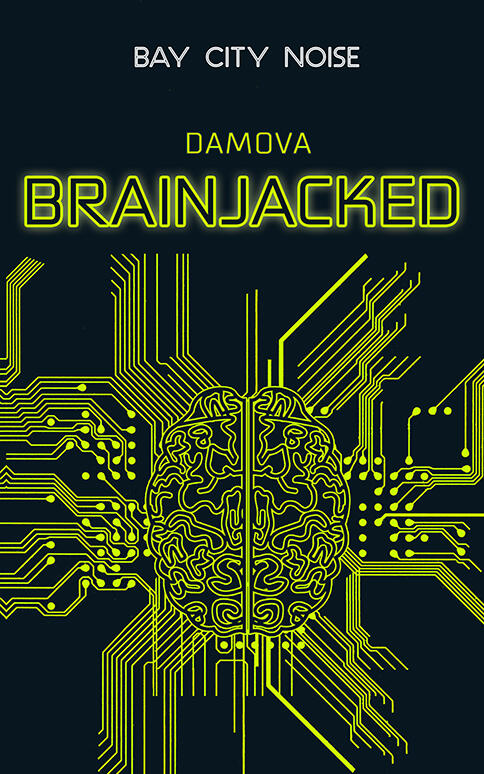
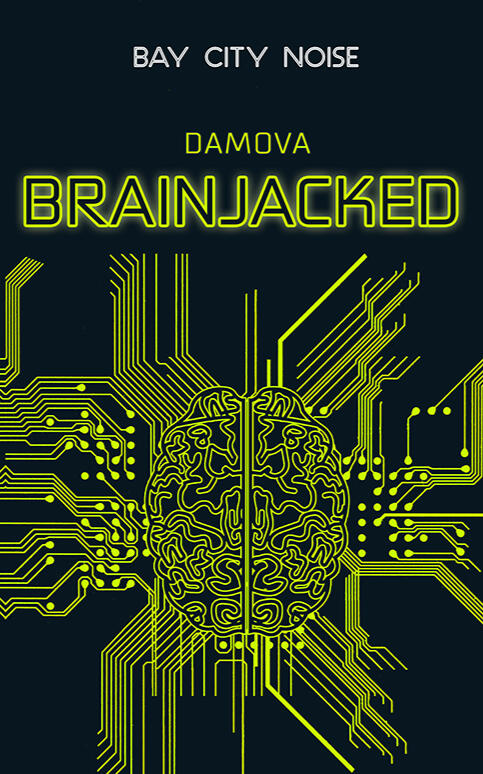
Cambridge Analytica scandal on a Black Mirror-ish trip for fans of Blade Runner & Neuromancer.Brainjacked, is a multi-POV 118,000-word cyberpunk technothriller, set in Bay City, a corporate dystopian megacity in Florida.Click here to join the ARC team.Want to know more? Click the cover!
Other Works
Stories from planet Tyche
Bay City Noise
cyberpunk tales from the corporate-dystopian megalopolis
Brainjacked
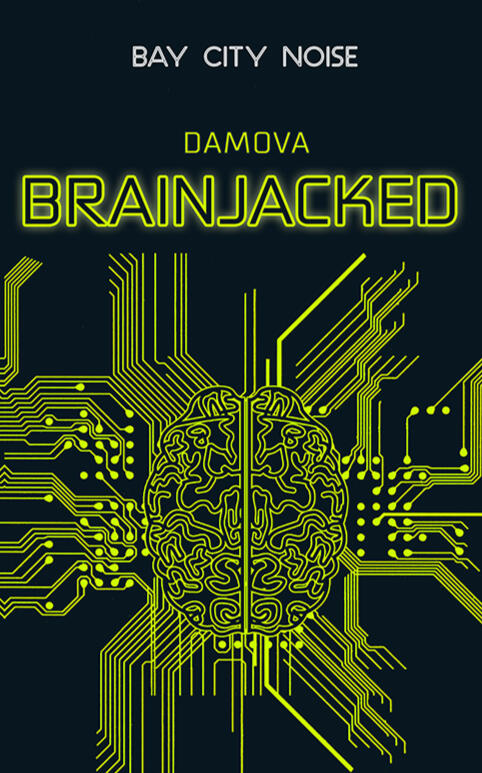
In Bay City, America's first corporate-owned megalopolis, the neural implant everyone wants is called the MyHUD.And Phil Schooner just won one.A dock worker kept alive by a failing lung implant he could never afford to replace, Phil wins the Shared Vision Implant Lottery and believes his luck has finally turned. But the MyHUD doesn't just keep him breathing. It begins to rewire him—sharpening his temper, turning cruelty into pleasure—until, one unrecognizable night, he does the unthinkable to the people he loves most.Detective Simone Foxworth has seen what broken technology can do. As she links a string of impossible murders, she uncovers a truth the most powerful corporation in the city will kill to bury: the implant everyone is racing to buy can quietly turn anyone into a weapon.A noir-soaked cyberpunk technothriller where humans are just another asset. For fan Neuromancer and Blade Runner.Comparable books
The Body Scout by Lincoln Michel, for its noir detective in a body-modified corporate future, and Upgrade by Blake Crouch, for its near-future biotech premise and crossover thriller pacing.Publication period mid-December
The Lottery
The Lottery is the first short story set in Bay City Noise, a standalone tale about a father, a failing body, an old implant and a lottery he can't afford to lose.All three parts of The Lottery are available for free on Substack, from Sep 12.
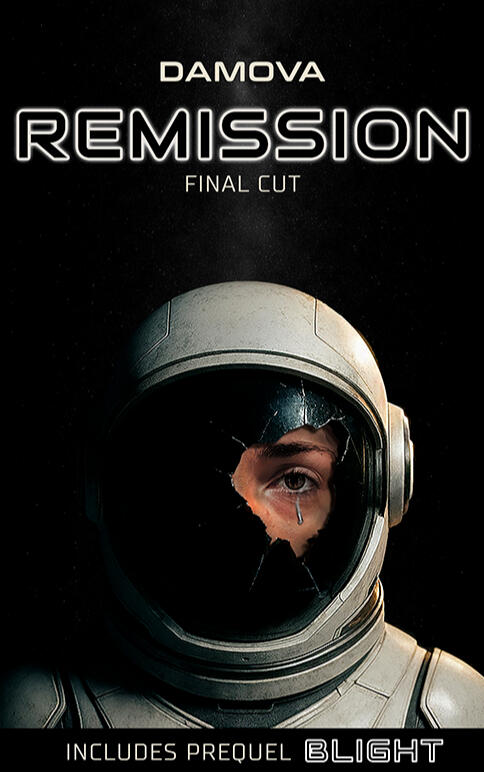
Remission
ebook Final Cut Edition
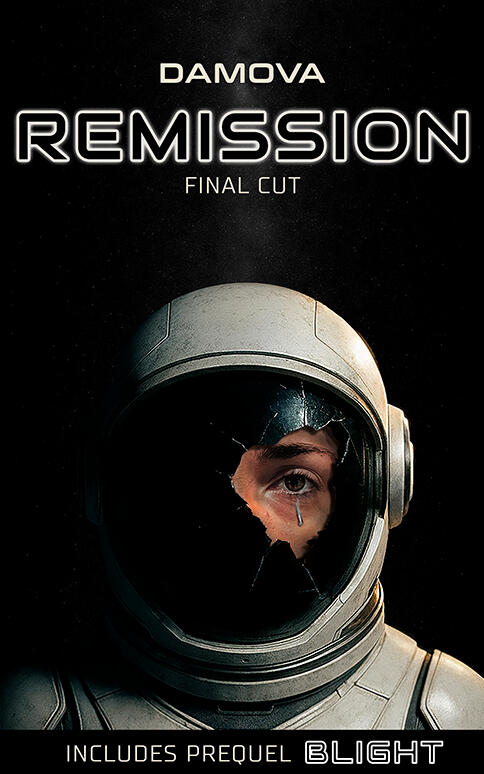
THIS EDITION INCLUDES BLIGHT PREQUEL SHORT STORYThe ESV Thorfinn’s mission to the exoplanet Tyche was supposed to be simple: investigate a communications blackout, fix the problem, return home.But their lander explodes on entry.Stranded on a barren alien world, Dr. Karin Amani finds the research base abandoned and her squad scattered. The pale vegetation engineered to terraform the planet has grown completely out of control—and it’s hungry for more.As she searches for survivors, Karin uncovers a disturbing truth: this mission was compromised from the start. Someone knew what she’d find down there.Now she faces an impossible choice between her own survival and stopping a contamination that could destroy humanity.A gripping survival psychological horror for fans of Annihilation and The Invincible.
⭐⭐⭐⭐⭐
"A cerebral space thriller that trades explosions for existential dread—and wins."
⭐⭐⭐⭐⭐
"This isn't loud sci-fi. It's haunting sci-fi"
⭐⭐⭐⭐⭐
"Explores what happens when a normal person is forced to accept losses and still carry on because the stakes are too high to give up."
⭐⭐⭐⭐⭐
"Thought-provoking, intriguing... lives in the realm of 'what if.'"
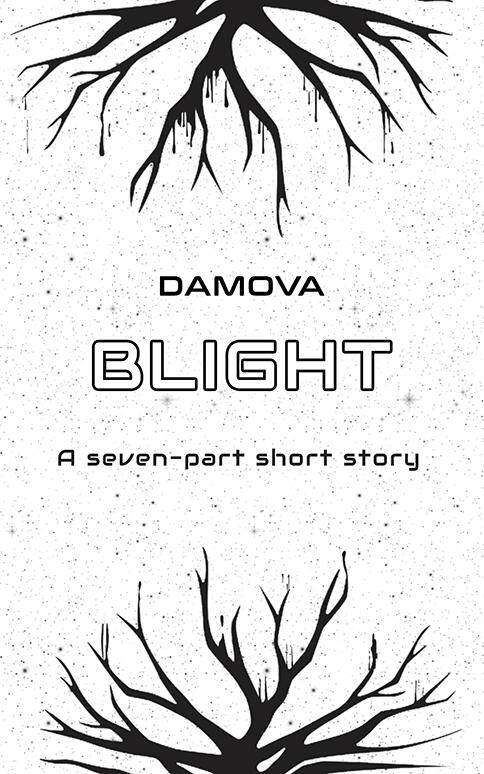
Blight
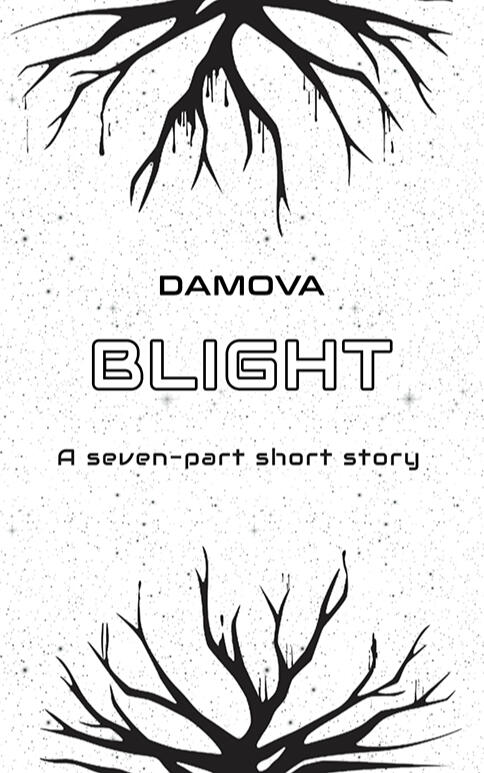
Gabriela Nuñes, head of security on a remote research base, is sent to find out why the scientists in the underground labs keep getting hurt.What she uncovers is no accident and by the time she understands it, it's too late for her. But maybe not for everyone else.Blight is a standalone prequel to the sci-fi psychological horror Remission.
Welcome to Bay City, America's first private megalopolis, a corporate-owned city of thirty million souls raised on the drowned ruins of Tampa Bay. Behind its climate bubble, nine districts climb from the flooded docks to the gated villas of the ultra-rich, and everything—and everyone—has a price. This is where the stories of Bay City Noise unfold.Explore the city below.
The City
Urban Area: 1,215 sq mi (3,147 km²)
Total Area: 2,122 sq mi (5,497 km²) including Lakeland & Old Tampa
Population: 30,000,000 registered residents
Density: 24,700/sq mi (9,500/km²)
District: 9 urban + Lakeland Farm District + Old Tampa
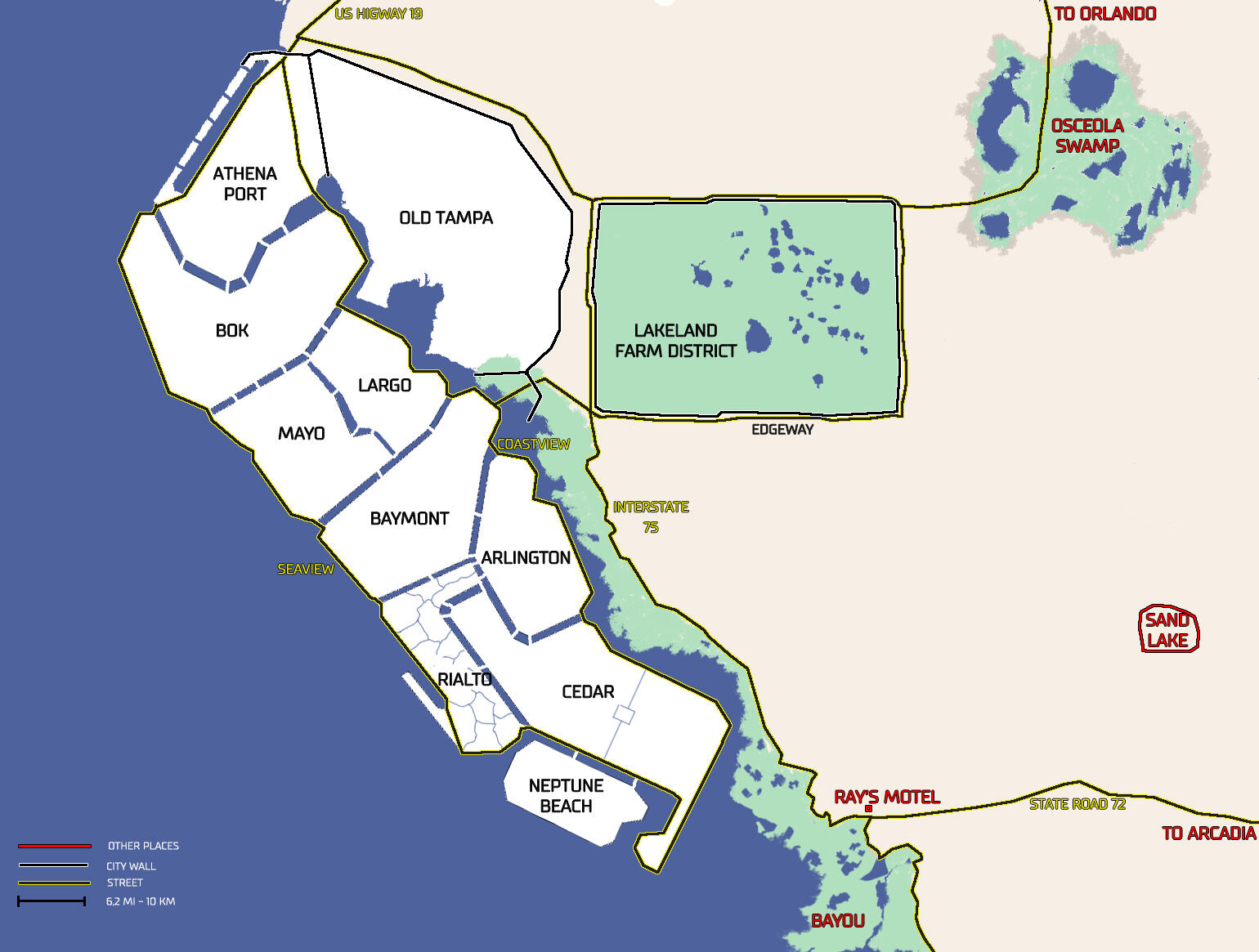
Bay City Noise is a private megalopolis of some thirty million registered residents—and countless undocumented others—built along the oily expanse of the old Tampa Bay, ironically renamed Clearwater Bay. It is one of the last cities of a drowning world: as the seas rose and the deserts spread, coastlines were redrawn, nations and borders unmade, and the survivors were driven to crowd into the few urban centers still fit for human life.A drowning state.
When Florida began to sink, the Alvarado administration answered with half-measures ignoring a scientific community that warned no temporary fix could hold. As the ocean swallowed the first neighborhoods, the government managed little more than a mass evacuation to neighboring states, and Alvarado fell after a single term.
Her successor, the young hardliner Christian J. Kessler—a favorite of the construction lobby and the Defense Department—staked his presidency on rebuilding the drowned areas of Tampa. It was a catastrophe: costs ballooned into the hundreds of billions, contractors went bankrupt mid-project, and the reconstruction was never finished. Yet by then homes and offices had already been sold, businesses and families had moved into the half-built city, and when the corporations pulled out, entire abandoned districts filled with the hundreds of thousands of refugees fleeing sinking and desertifying lands. The scandal that followed exposed corruption on a national scale and put nearly the entire administration in handcuffs. Kessler included.The birth of a new city
With the government gutted, Vice-President George Bello took the reins, abandoned the ruined reconstruction entirely, and handed the whole project to Talbot-Yanada, the corporation already famous for salvaging other imperiled cities and for the recent rebuild of Neo-Nagasaki. Their task: to raze what remained and raise a modern metropolis in its place.
The result was Bay City. Where the old rescue had failed, the corporate city thrived, giving a home to over twenty million Americans of the nearly hundred million whose homes had been lost to the oceans or eaten by the desert. Plus all those who could emigrate there legally from thousands of other devastated regions, drawn to one of the few cities still growing. It was, in its way, a new world: a private megalopolis built to be fed to the corporations, yet one where anyone could vanish completely, or claw their way up until they touched the sky. Or so its proud, hard-working new settlers told themselves.How the city survives
Bay City survives inside an artificial microclimate. Enormous marine towers off its coast, called chimneys, generate a climate bubble over the city, holding back the killing heat of the world outside. The system was never meant for Earth at all: it was designed to terraform exoplanets, and was hastily repurposed when climate collapse became a global emergency. Beyond the bubble, the desert reigns.
The chimneys are the city's lungs, and its most vulnerable point. After the eco-terrorist attack of March 15, when a strike on the offshore chimneys was narrowly thwarted by joint U.S. and Talbot-Yanada forces, the U.S.S. Kennedy was stationed to patrol them, and has kept constant watch over them ever since.A city built as a ladder
Talbot-Yanada laid the city out with cold precision: nine island-districts, each a rung on the social ladder, climbing from north to south: from the working class at the docks of Athena, up through the skilled labor, technicians, and white-collar tiers, to the corporate elite of Cedar and, at the very top, Neptune Beach, the gated paradise of millionaires that no one may enter without a permit or an invitation. To these are added Lakeland, the agricultural district that feeds and waters the metropolis and part of the state beyond, and Old Tampa, that first, failed attempt to rebuild the old city, now sealed behind a wall and abandoned to itself and to those who took refuge in its ruins.Who rules the city
Because Bay City is a mostly private city, its City Council is split exactly in half: one part elected by the citizens, the other made up of representatives of the major corporations, first among them Talbot-Yanada. On paper, public and private power sit as equals. In practice, everyone knows where the weight lies.
The Council commands the City Council Marshals (CCM), a private police force better armed, better trained, and effectively superior in the chain of command to the public BCPD. Officially the Marshals answer to the Council as a whole; in reality they serve only its private half—and this is an open secret the whole city lives with. The elected officials write the laws; the corporations hold the guns.Bay City is, in the end, exactly what it was built to be: a place where thirty million lives are just another asset on the ledger. And where, all the same, people keep climbing.
The Districts
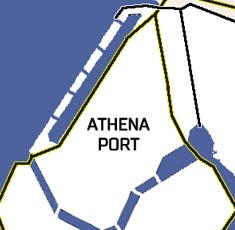
Area: 174 sq mi (450 km²)
Population: 7,500,000
Share of Bay City: 25%
Density: 43,200/sq mi (16,700/km²)Athena Port is the northernmost district of Bay City, and the only one of the nine urban districts that is a peninsula, making it the sole district directly connected to the mainland. It is the most populous district, reaching 7.5 million inhabitants, most of them packed into the housing megabuildings that tower over the city. As its name suggests, the district is home to the city's vast commercial port, which occupies the entire north-western area, alongside a number of industrial facilities. It is also the poorest district in the city, inhabited chiefly by laborers and dockworkers. Among other things, the district houses the large skytrain depot serving the Coastview and Seaview lines, the only inter-district lines. Beyond the port, it is known for the Tarpoon area in the north, site of Bay City's northern customs entry and one of the crossings that give access to Old Tampa.
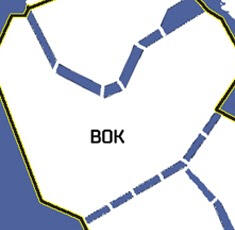
Area: 218 sq mi (566 km²)
Population: 6,900,000
Share of Bay City: 23%
Density: 31,600/sq mi (12,200/km²)Bok is the largest district of Bay City, roughly the size of Chicago but with well over twice its population. Despite its size, much of the district is taken up by the enormous industrial and logistics facilities it is famous for. Nearly 7 million inhabitants are packed into its housing megabuildings, making it the second most populous district: almost all of them factory hands and workers on the industrial and logistics lines. For all its considerable size, Bok is the only district controlled entirely by a single criminal organization: the New Chinese Triad, affiliated with the major logistics companies, such as the fellow Chinese-owned Dalian Logistics.
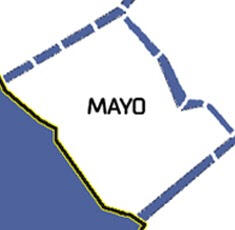
Area: 117 sq mi (303 km²)
Population: 4,600,000
Share of Bay City: 15.3%
Density: 39,300/sq mi (15,200/km²)Mayo is the blue-collar residential district par excellence, a dense expanse of housing megabuildings that house much of the city's working class. Yet unlike the districts to its north, Mayo is not given over to port and industry: alongside the residential towers it holds a growing layer of commercial and service businesses, and the first proper retail and commercial zones one finds moving in from Athena Port and Bok. Shops, markets, workshops, and service outfits fill the ground levels and the spaces between the megabuildings, giving the district a busier street life than the purely industrial north. Mayo is contested between two criminal organizations: the Goblins, a kind of militarized gang of nerds, and Barrio III, a South American criminal outfit transplanted directly into Bay City.
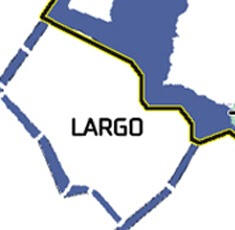
Area: 85 sq mi (221 km²)
Population: 3,500,000
Share of Bay City: 11.7%
Density: 41,000/sq mi (15,800/km²)Largo is the second most densely populated district, split between housing megabuildings and lower-density residential areas inhabited mostly by the city's lowest-ranking clerical workers. Similar in nature to Mayo, Largo represents a small step up from its twin district, if only for the presence of the residential zone reserved for the police's non-commissioned officers (that is, up to sergeant rank). Control of the district is contested among several groups—among them the heavily armed Schodów—and the police themselves, who use their criminal contacts to run their operations in Baymont.
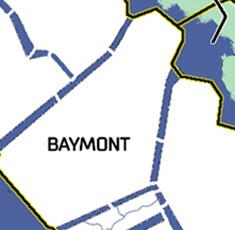
Area: 208 sq mi (538 km²)
Population: 2,900,000
Share of Bay City: 9.7%
Density: 14,000/sq mi (5,400/km²)Baymont is the first district of what might be called Bay City's middle class and white-collar workers. Besides being home to the police's central precinct in Police Plaza, it is also the first district where the BCPD actually does its job, actively enforcing security and control over both licit and illicit activity. In fact, the BCPD directly manages all those criminal enterprises that remain indispensable, from the black market to the drug trade, ensuring that no criminal organization ever takes control of Baymont. It is the second largest district in the city, yet it hosts no housing megabuildings—an honor reserved for the poorer areas farther north—so its population density drops dramatically. It is also home to practically all of the city's administrative buildings. Baymont is likewise the first district where the street level is entirely underground, buried in a dense network of roads that connect directly to the buildings' underground garages, leaving the ground floor to pedestrians. There are a few parks, but little greenery: the main gardens, such as the one at Police Plaza, are gardens of gravel and sparse trees.
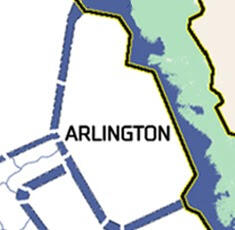
Area: 127 sq mi (330 km²)
Population: 2,200,000
Share of Bay City: 7.3%
Density: 17,300/sq mi (6,700/km²)Arlington is primarily the district of middle management, both institutional and corporate. Coming down from the north, it is the first district where a stroll might actually be pleasant: as in Baymont, the street level is entirely underground, leaving broad pedestrian spaces dotted here and there with urban parks, with canal-side promenades ringing the district. A dense network of elevated pedestrian skyways and skytrain lines links the towers and skyscrapers directly, at varying heights. It is also home to the Florida Broadcasting Network, as well as the first mid-tier national and multinational corporations.
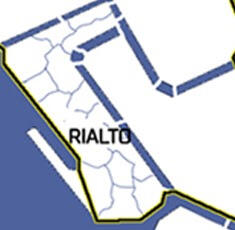
Area: 85 sq mi (221 km²)
Population: 1,050,000
Share of Bay City: 3.5%
Density: 12,300/sq mi (4,800/km²)Rialto is the city's tourist district: a mix of Las Vegas, Dubai, and Venice, from which it takes both its name and the dozens of canals that run through it. Equipped with a marina, Rialto is the district of casinos, hotels, fashionable shopping streets, amusement parks, and climate-controlled venues where one can even ski indoors, and so on. It has one of the lowest resident densities in the city, since most of the workers staffing its thousand attractions commute in every day, unable to afford the rooms and apartments reserved for tourists. As in the other southern districts, the street level is buried underground, but the skytrain and pedestrian skyways are sparser, given the great heterogeneity of its buildings.Rialto is also home to Our Lady of La Leche, simply called La Leche by BC citizens: born as the heart of the Catholic community, over time it transformed into a gathering point for every religion, old and new—a zone that now holds the houses of worship of Bay City's main faiths, and of whichever ones happen to be in fashion at the moment.
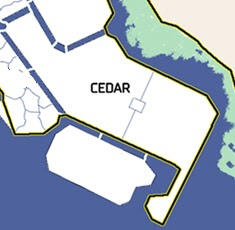
Area: 93 sq mi (240 km²)
Population: 1,200,000
Share of Bay City: 4%
Density: 12,900/sq mi (5,000/km²)Cedar is the heart of the city's corporate and political power and more besides. It is the district of high-level executives, the last rung of the social ladder unless one happens to be the child of a billionaire, a CEO, or the owner of a multinational. Its urban design was drawn by Osamu Yanada president of Talbot-Yanada corporation, who chose to shape Cedar's cityscape in person, creating a small, hyper-modern Kyoto. At its center, ringed by a canal, lies the perfectly square island of Sugi: a beautiful Japanese garden from whose heart rises the Yanada Tower, access to which is granted to very few. In Cedar, too, the street level is entirely underground, giving way to a handsome alternation of skyscrapers and Japanese gardens. Although the police patrol the district, its security is guaranteed by the City Council Marshals, the corporations' immensely powerful private police force, run directly by the private half of the city council. Cedar hosts private corporations' ports and a marina for the yachts of the ultra-wealthy.
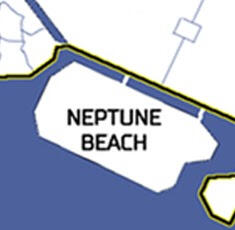
Area: 108 sq mi (278 km²)
Population: 150,000
Share of Bay City: 0,5%
Density: 1,400/sq mi (540/km²)Neptune Beach is a small, private district occupied exclusively by the villas of BC's ultra-rich, home to millionaires, CEOs, top-tier VIPs, and the like. Its entrance, watched over by the City Council Marshals, is off-limits to anyone who is neither a resident nor the holder of an invitation. As its name promises, Neptune Beach boasts genuine beaches with swimmable waters, unlike the rest of the city, which is ringed by the toxic, oily waters of the Gulf of Mexico.
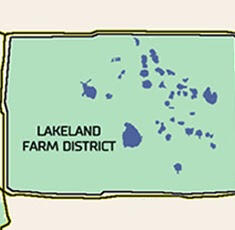
Area: 480 sq mi (1,244 km²)
Population: noneLakeland under construction
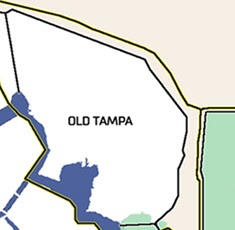
Area: 427 sq mi (1,106 km²)
Population: no registered residentOld Tampa under construction
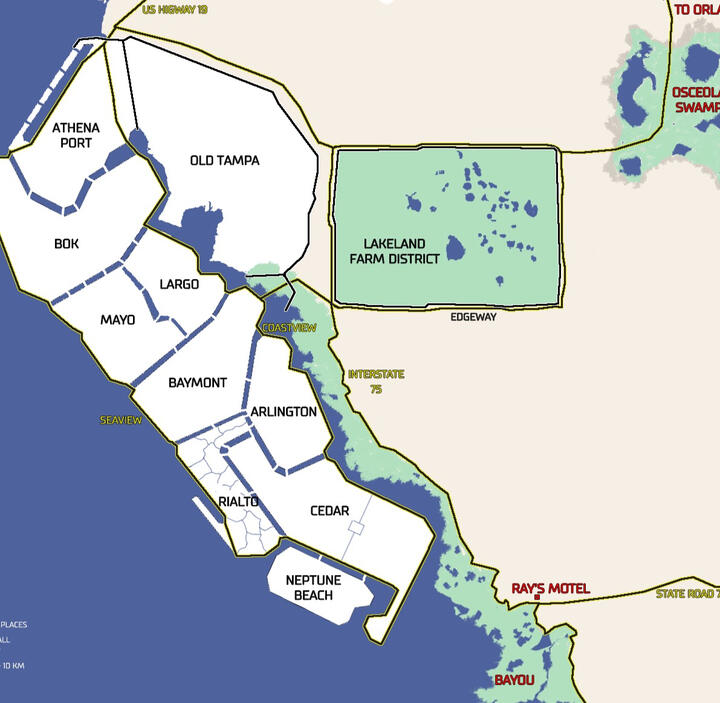
Surrounding area under construction
Who's this guy?
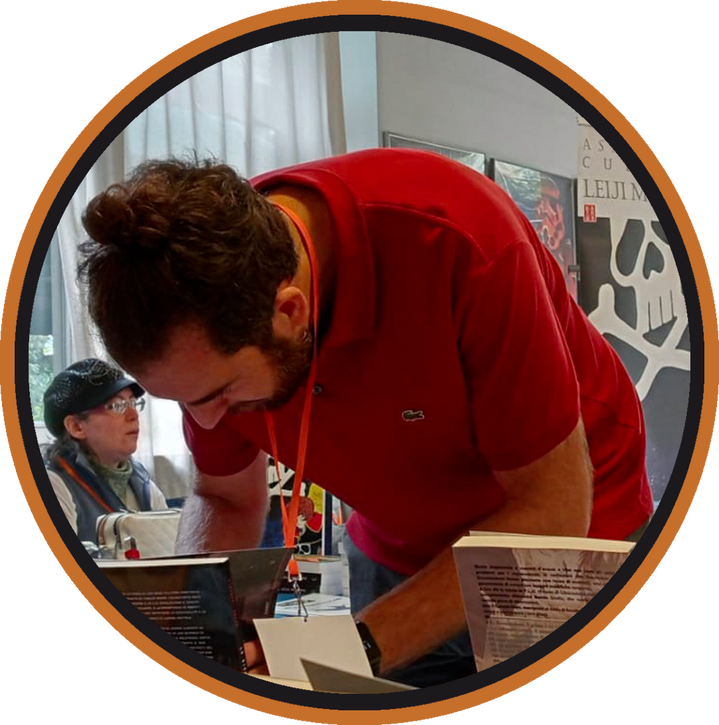
Hi there, this is the part where I start writing in 3rd person as if I barely know the guy I'm talking about... me.Damova is an Italian millennial raised on everything from Taoist philosophy to Dune's endless sand, which actually explains both his existential dread and his love for dark stories. He also spent years as a tabletop RPG Game Master, a passion that taught him to build entire worlds for people who then immediately ignore the plot. It's also why he has more unfinished lore than finished books.He lived a bit in the magical island of Ireland, where he worked in localization and learned pro-level self-pity that really worsened his writer's imposter syndrome.
In 2024 he took a professional course in Literary Editing, which means he could tell you why your manuscript doesn't work while his sits unfinished.
Then, in 2026 he published his debut work REMISSION, a sci-fi psychological horror about a doctor, a deadly planet, and the very bad decisions that brought them together.Since he's great at procrastinating, but also at piling up projects and WIPs, he periodically(-ish) writes on DAMOVA'S MESSY DESK, a Substack where he post speculative short stories and some insights.He's currently working on the nth unfinished project, while wondering if Ridley Scott to call for adaptation. He hasn't yet.

Damova's Messy Desk is where an elusive creature writes in the dark, leaves the pages by the burrow's mouth, and disappears quickly. Original short fiction from the worlds that grow underground. No lessons, no morals, no "what this story taught me." Just stories and honest thoughts about my unglamorous writing journey, left on the doorstep for whoever wanders by.